


Dragon Q Energy March 2026 Update
Growing Momentum Across Key Markets

Powering the Future of AI
Powering AI is becoming one of the biggest challenges in modern infrastructure. As AI systems scale, data centers are struggling to keep up with highly dynamic and unpredictable workloads. The shift to 800VDC improves efficiency—but it doesn’t solve the core issue: delivering stable, responsive power across the facility as demand fluctuates.
Over the past few months, we’ve been conceptualizing a new facility-wide power architecture aligned with this shift. Our approach combines DQE battery energy storage systems with proprietary supercapacitor architectures to help manage rapid fluctuations in load while supporting emerging 800VDC environments.
What makes DQE’s approach different?
Near-rack power delivery — energy storage and supercapacitors deployed within inches of the rack
Preserves white and gray space — systems can be installed under-rack, in-hall, or outside the facility
Facility-wide load balancing — supports bursty and cyclical AI workloads across the DC distribution bus
Hybrid response times — supercapacitors handle millisecond spikes while batteries support longer transitions
Built for 800VDC architectures — aligned with next-generation data center power distribution
We are now moving into customer discovery where we have gained significant traction within the industry and are beginning to engage with implementation partners to bring these concepts into real-world deployments.
We are currently continuing development of our data center product family, core battery technology, PowerPole, and BEACON, and to bring these systems to market. To learn more about the architecture and how to participate in the round, please see the HVDC pitch deck below.
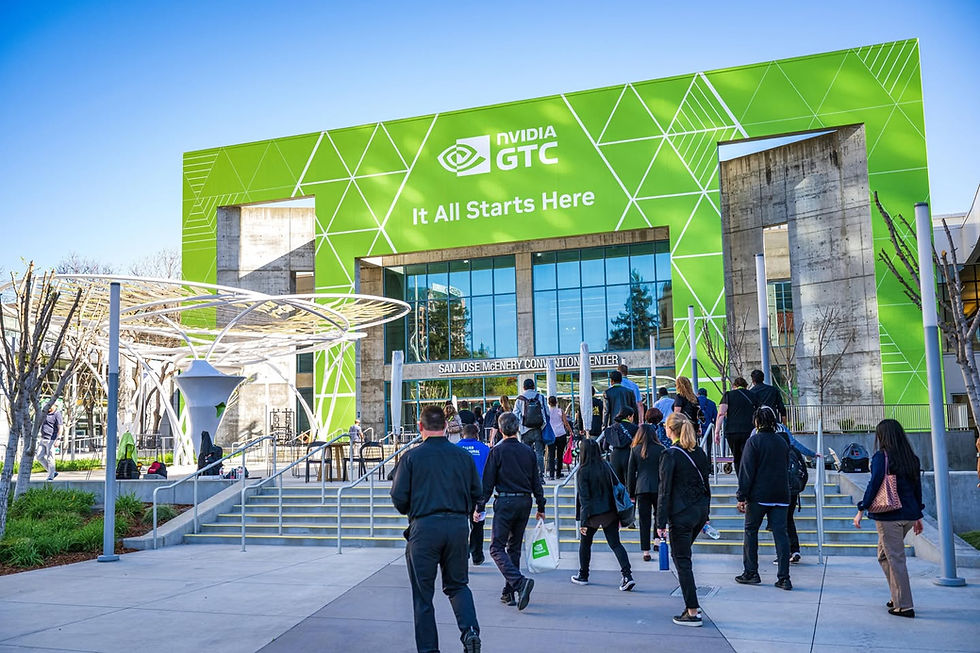
Dragon Q Energy Attends NVIDIA GTC
Building on the conceptualization of our 800VDC data center power architecture, we attended NVIDIA GTC in San Jose earlier this month as an NVIDIA Inception Program startup. While there, we conducted customer discovery and met with several leaders across the data center power ecosystem to better understand how next-generation AI infrastructure will be powered.
These conversations confirmed that power delivery is quickly becoming a primary constraint to scaling AI infrastructure, reinforcing the need for new architectural approaches. They also led to productive discussions and early-stage partnerships with several Fortune 500 companies, including leading data center electrical and construction firms, as well as world-class battery and supercapacitor companies.

Engagement with US Navy
DQE will be participating in ANTX Coastal Trident this year as part of Event India, a U.S. Navy-led experimentation environment designed to assess emerging technologies in real-world conditions. ANTX provides a low-risk setting for demonstrating and evaluating new capabilities alongside government stakeholders, operators, and other technology developers, with a focus on determining what works and identifying paths forward for future deployment.
Our technology has been selected as part of the Event India module, where efforts are focused on maritime domain awareness, unmanned systems, and communications in offshore environments. In this setting, we will be demonstrating our ruggedized energy storage and networking capabilities and are actively seeking integration partners with systems that require reliable off-grid power and connectivity.
Humanitarian Traction in Africa
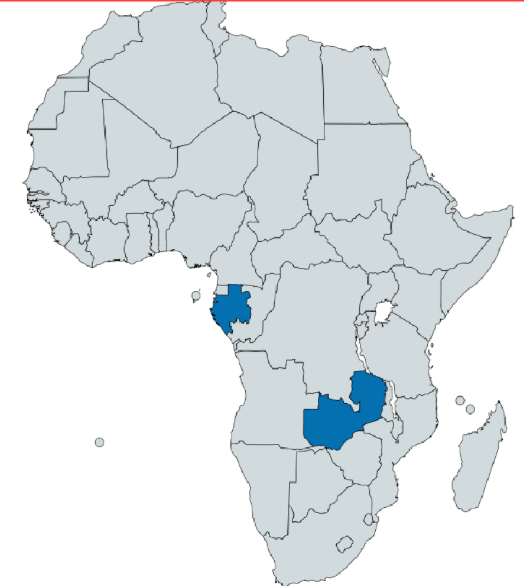
32 Unit Zambia Deployment taking shape
We are currently advancing a proposed 32-unit deployment of our PowerPole systems in Zambia, aimed at delivering reliable electricity and connectivity to 29 rural healthcare clinics. Over the past month, we have been working closely with Unite to Light, Direct Relief, the Zambia Conference of Catholic Bishops (ZCCB), and ERAC Energy to develop and submit a joint grant application to the Energy and Environment Partnership (EEP). The deployment is designed to provide consistent power for refrigeration, lighting, and critical medical devices in clinics that currently lack reliable access.
While still in the early stages, this effort represents an important step toward deploying our technology in environments where reliability is essential. If awarded, the project would serve as a foundation for broader expansion, demonstrating how integrated power and connectivity solutions can strengthen healthcare infrastructure across underserved regions.
200 Unit EOI Received from Gabon
We’re beginning to see early momentum in Gabon through the efforts of Alexander Mintsa, a recent UCSB graduate who continues to work closely with our team following his internship last year. Driven by a desire to bring the PowerPole to his home country, he has helped initiate discussions that led to an expression of interest from the Gabonese government for up to 200 units to provide reliable power and connectivity across universities. While still early, this represents a promising step toward potential large-scale deployment. More to come!


Comments